
- gett-na.com
- Multimedia Console as a Touchless Control Panel
Multimedia Console as a Touchless Control Panel – Use Case at WPRA
This reference demonstrates GETT.PROJECTS’ modular approach, illustrated by a project for a customer who has requested anonymity.* We’ll call them “WPRA.”
*Because we often act as an OEM service provider, our clients prefer project confidentiality. We rarely receive permission to use their names in marketing. “WPRA” is a fictionalized name meaning “We Prefer to Remain Anonymous.”
Project Overview
-
Customer: WPRA
-
Product Type: Multimedia console
The multimedia panel was envisioned as a modern, intelligent, visually striking control panel featuring six buttons, an NFC interface, and a display screen. It was to be built modularly. In addition to registering keystrokes and showing visual content, the console needed to detect specific installation setups and send corresponding switching signals. Full menu navigation, control logic, and processing routines were also part of its intended functionality.
Mechanical and machine engineering; food service and catering.
Although WPRA operates in the food industry, the product design makes the console suitable for any aesthetically conscious environment — for example, retail points of sale or furniture applications.
Because this project took place during the COVID-19 pandemic, the customer prioritized innovative, touchless input technology. The preferred choice was an optical button mechanism that would reduce physical contact.
Consultation, Product Development, Quality Assurance, and Production
-
Illuminated optical operating elements (touchless)
-
Switching gap: 1 cm
-
Color graphical display: 2.8-inch, 320×240 resolution
-
3 mm tempered glass front, with rear design applied via screen printing
-
Rear assembly frame to house electronic modules
-
Modular, replaceable electronic components
-
Glass sealed to the frame
-
NFC interface
-
Dual RS232 interfaces
-
230V power supply
-
Four volt-free (potential-free) switch outputs
GETT Contributions
GETT.CONSULTING
Understand the application, examine the initial model at the client’s location, and review requirements.
Discuss proposed concepts, compare the pros and cons, present price estimates. The client chose one concept; additional requirements were defined. The final specification: a glass front panel with illuminated optical buttons and a display. It needed to be modular for different configurations, with custom graphical symbols for the display. A specification sheet was completed.
Present the finalized design, issue a binding quote, and get the specification sheet signed. Handoff of the project to GETT.LAB for further development followed.
GETT.LAB
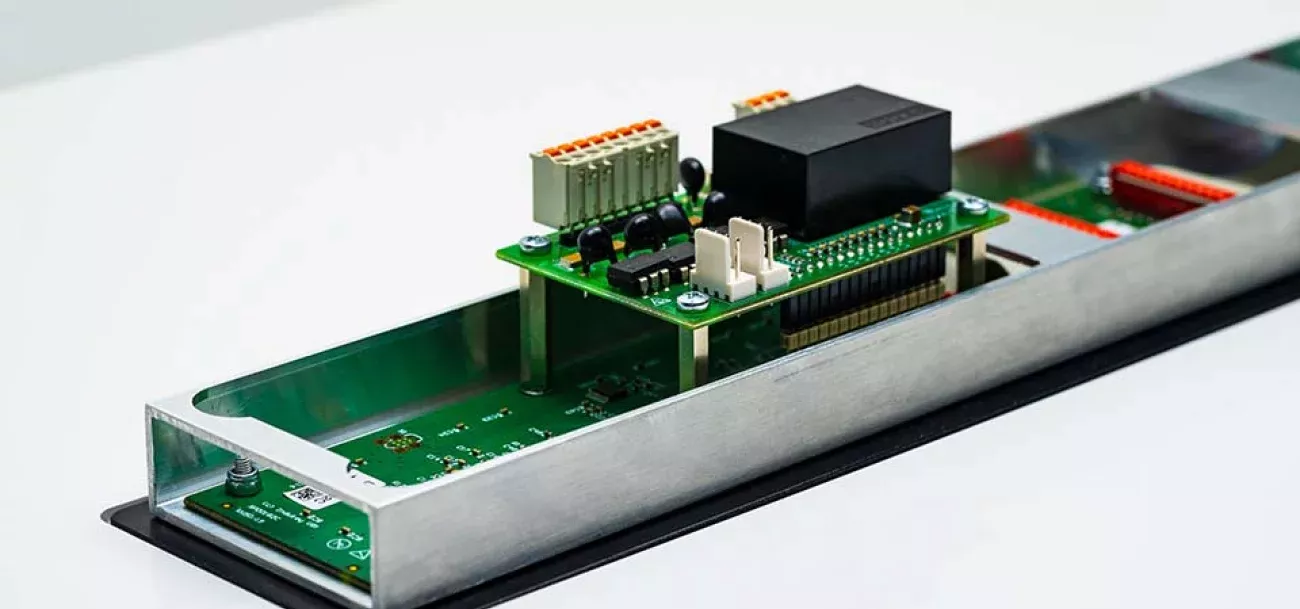
Frame, glass front, mounting, and assembly; prototyping with 3D printing.
Screen printing layout on glass; prototype visuals, using tools like CorelDraw; digital glass printing.
Designing circuit boards for buttons and adapters; power supply layout and integration.
Determining behavior of buttons, interfaces, display content, and outputs according to input; using C-compiler targeting STM32 microcontrollers.
Defining test criteria for both semi-finished items and the finished product; calibration of buttons; durability & reliability assessments.
GETT.QUALITY
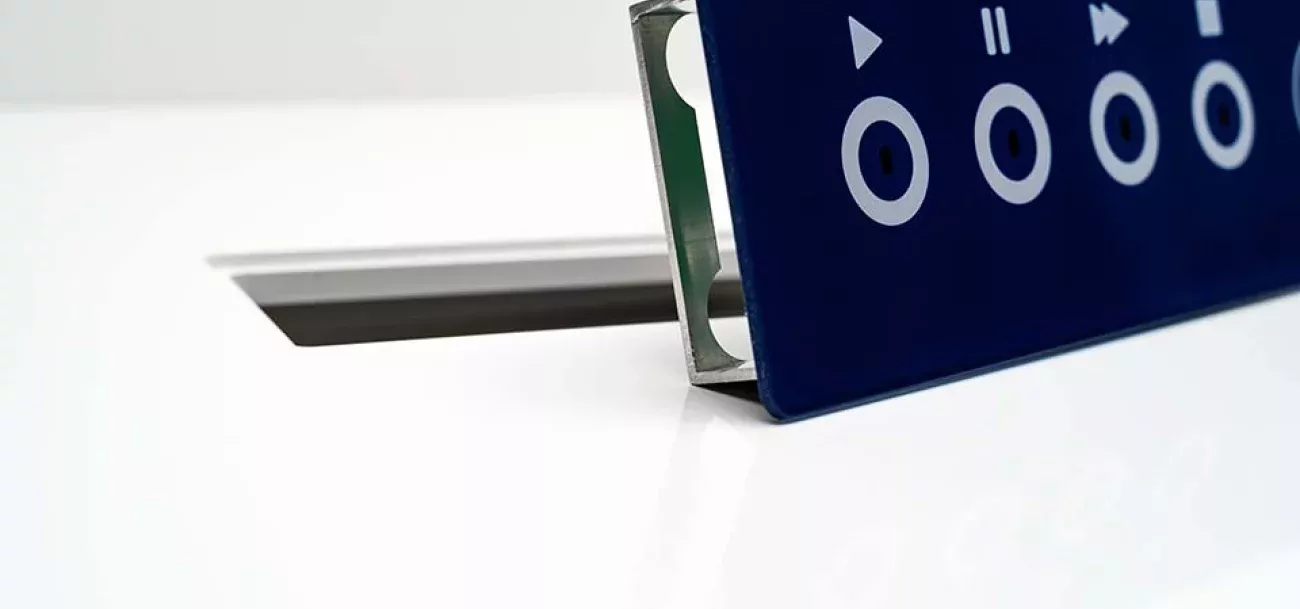
Assessed adhesion and durability of color on glass, quality of printed images, strength of bonded components, long-term performance of electronics.
Refrigerator, climatic shock testing cabinet, spectral photometer, cross-cut test in line with DIN EN ISO 16276-2.
GETT.FACTORY
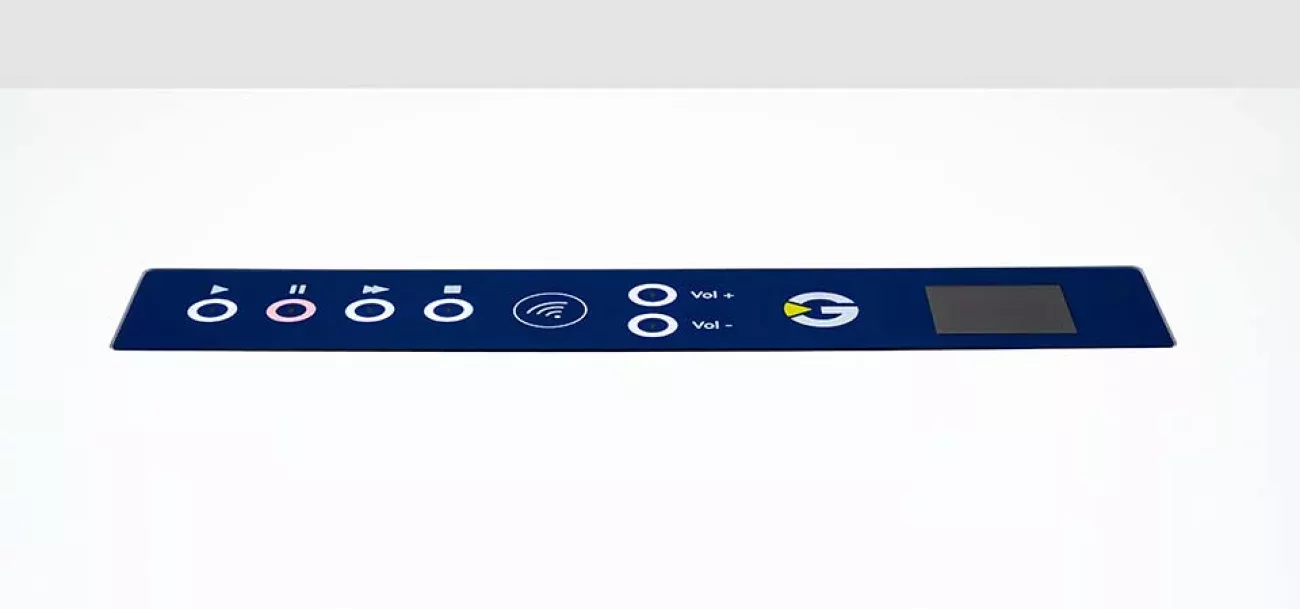
CNC milling for the aluminum assembly frame section.
Screen printing the glass front.
Gluing the glass to the frame, installing diffusers and light blockers, integrating electronic components.
Verifying functions and optical quality using calibration tools and precise measuring equipment.